
Acro Fundamentals
By Brianne Martin
ACRO dance is where strength meets artistry—blending the athletic elements of acrobatics with the fluidity and expression of dance. Dancers build flexibility, balance, and control while learning to seamlessly connect skills like tumbling, balances, and limbering into choreography.
Why Acro Fundamentals Matter
Acro is a style of dance that immediately commands attention. What matters just as much as the skill itself is the foundation that supports it. Dancers feel most confident when their skills feel consistent and supported. That sense of safety and control comes from strong fundamentals built over time.
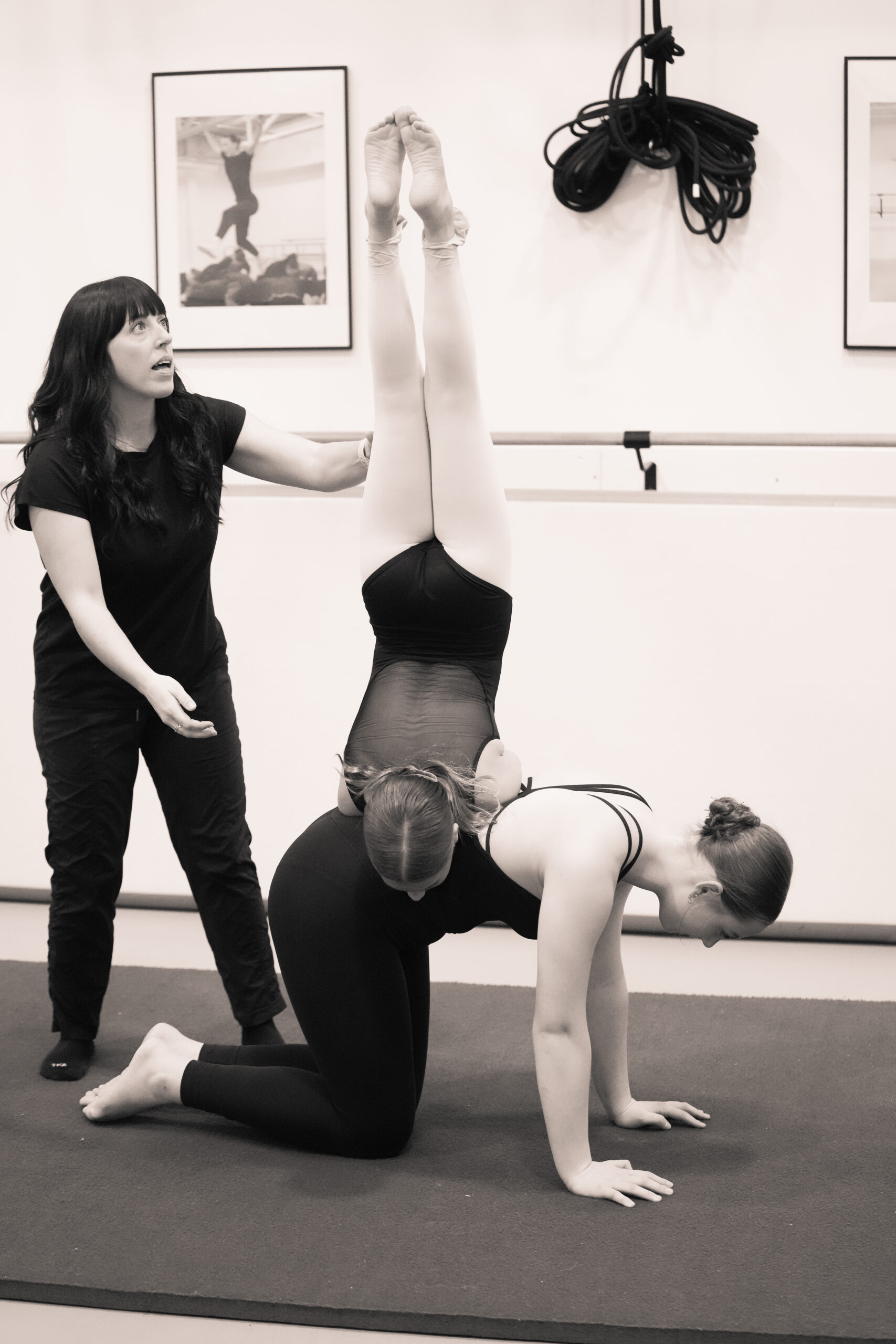
Acro asks a lot of the body, especially when it comes to strength and support. Much of class is spent learning how to carry weight with proper alignment, strength, and controlled flexibility through the arms, shoulders, spine, and hips. When that work is rushed instead of built through proper progressions, the body starts to compensate. Shoulders collapse instead of pushing away from the floor, lower backs arch instead of lengthening, and hips shift out of alignment. While this can make a skill possible in the moment, it increases strain on the body and raises the risk of injury over time. This is why fundamentals and progressions matter. They ensure strength, flexibility, and control are built in coordination with one another, supporting safer and more sustainable progress as skills increase.
Understanding Acro Fundamentals
Before a dancer moves through any acro skill, their body has to learn how to organize itself. That foundation is what allows acro skills to be performed with control, consistency, and safety.
From pre-primary through pre-professional acro levels, we focus on the same core foundations. While the foundations stay the same, expectations increase as skills become more demanding, requiring greater strength and awareness to support the work safely.
Some of the key foundations we return to consistently include:
-
learning how to engage the core and control the body
-
developing stable, supportive shoulders
-
understanding hip placement and pelvic alignment
-
building flexibility that is supported by strength
-
practicing balance, weight transfer, and safe transitions
These foundations are what support dancers as they progress, helping them move with confidence while protecting their growing bodies.
What Progression Actually Looks Like
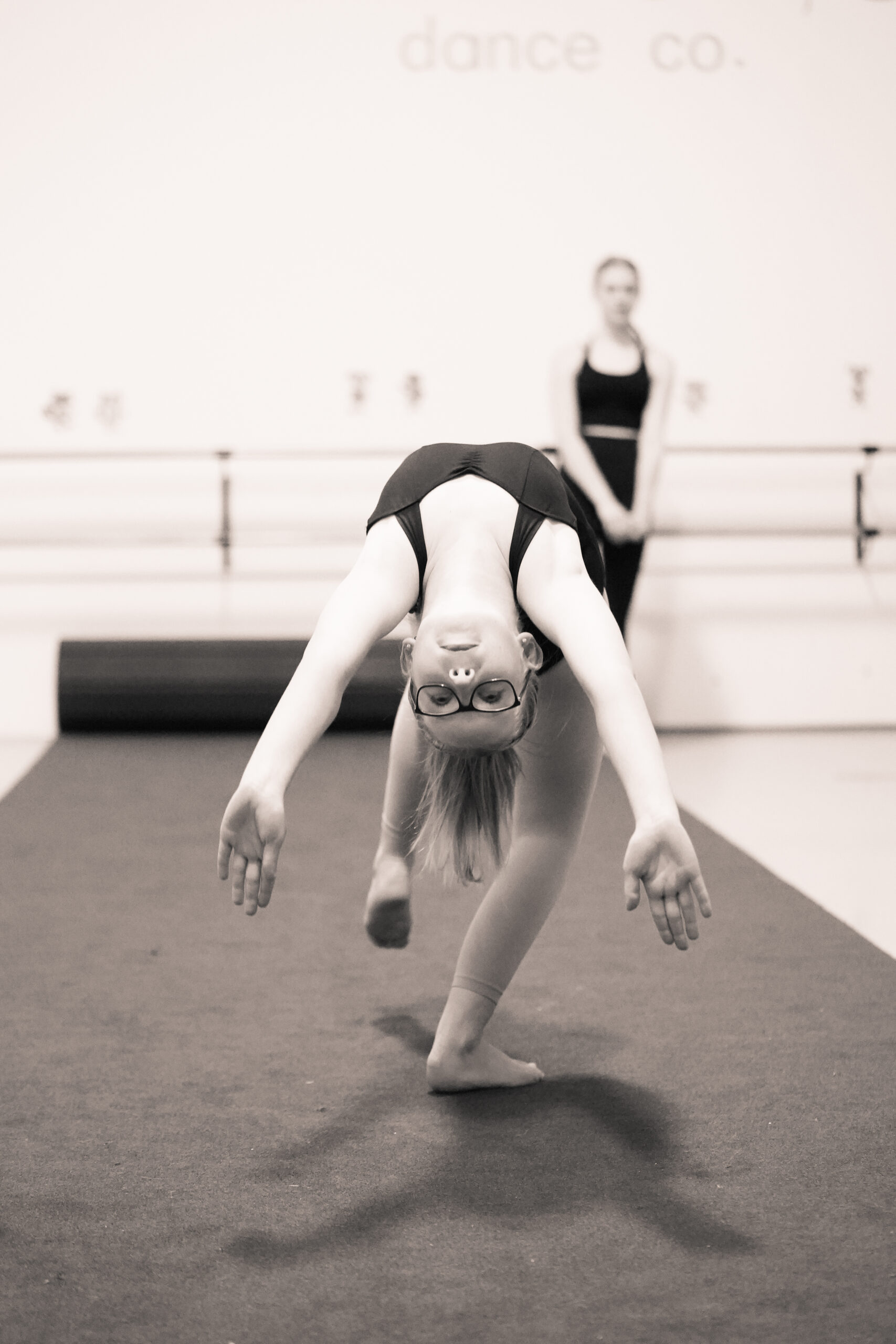
Bridge recoveries are a great example of how progressions build strength, alignment, and control over time. Each step prepares the body for the next demand. Nothing is skipped, and nothing is random.
Bridge Recovery Progression
-
Baby bridges
We begin by teaching dancers how to place their bodies in a supported position. The focus is on finding comfort in the shape and beginning to understand where weight is held. -
Centered bridges
Dancers work toward a stable, centered bridge with feet hip-width apart. We focus on opening through the shoulders, stacking shoulders over wrists, and lengthening through the spine rather than collapsing into the lower back. -
Strength and alignment within the bridge
At this stage, we emphasize hip flexor strength, quad and hamstring engagement, and how the body supports the position as a whole. The goal is control, not pushing range. -
Bridge recoveries with support
Dancers begin learning how to come out of the bridge using strength and control. This may include rolling up through the spine, walking hands up and down the wall, or practicing recoveries off a mat. -
Bridge recoveries from the floor
Once strength and alignment are consistent, dancers practice recovering directly from the floor. Arms stay by the ears, shoulders push and support, and weight travels forward instead of dumping backward. -
Carrying the pattern forward
This same pattern leads into front limbers, then front walkovers, and eventually into more advanced skills like front handsprings and front aerials.
Each step builds on the one before it. Skipping ahead might get a dancer through the skill, but it does not prepare the body to repeat it safely or consistently.
Why We Don’t Rush Skills
Being able to do a skill once does not mean the body is ready to repeat it safely or consistently. What we look for is not a single successful attempt, but how the skill holds up over time.
A walkover that works on a good day is very different from a walkover that stays strong in choreography, under performance pressure, and across an entire season of training. That kind of consistency only comes when the body is truly prepared for the demands of the skill.
This is how progress happens safely and with confidence.
Strength, Flexibility and Awareness
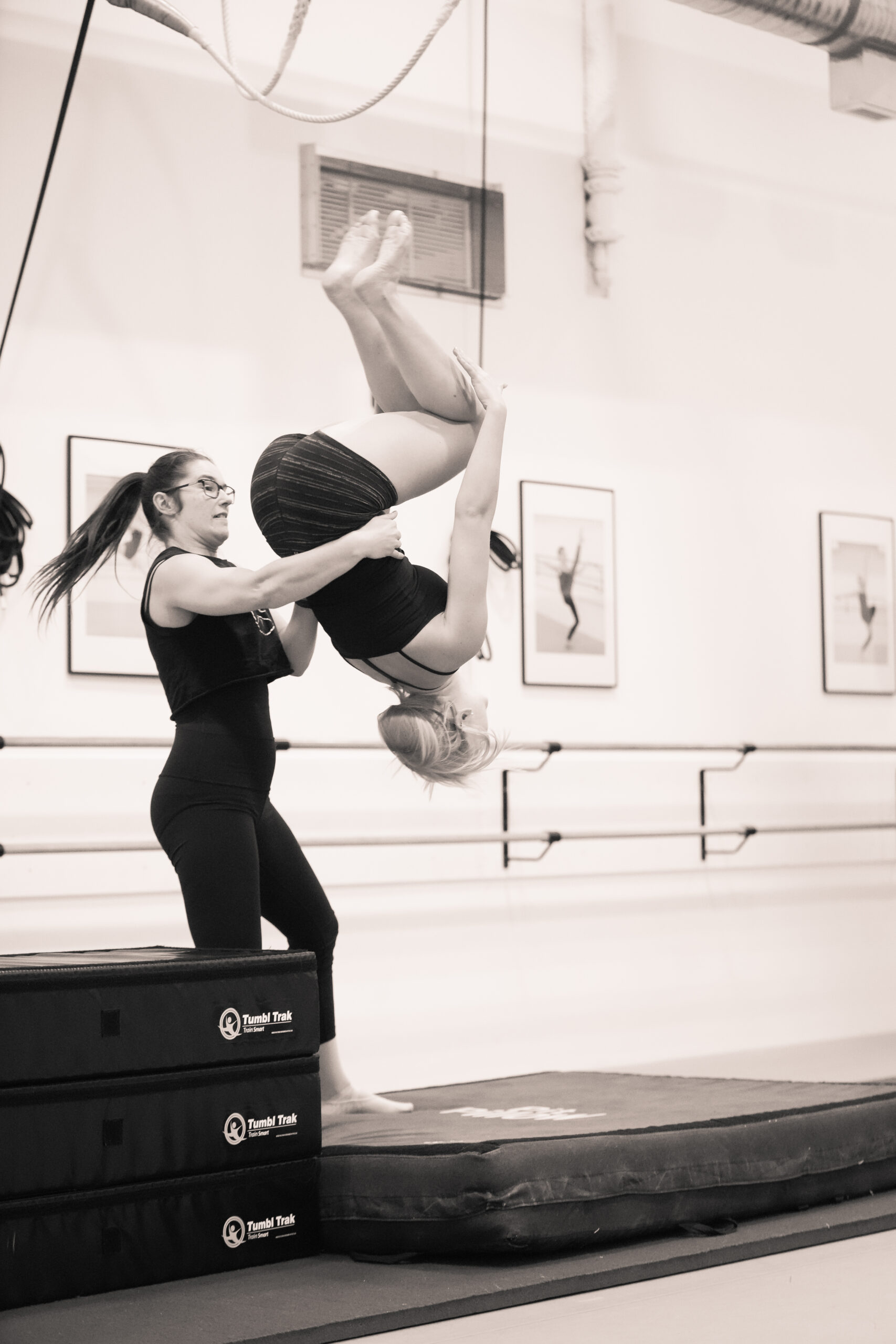
Flexibility is often what people notice in acro, but flexibility without strength creates instability. Strong acro training prioritizes flexibility that is supported, controlled, and intentional. This protects joints, supports alignment, and allows dancers to move with freedom instead of force.
Equally important is body awareness. Through consistent foundational work, dancers learn what proper support feels like. They learn to recognize when movement is aligned and when something is being pushed. That awareness helps dancers self-correct, make safer choices, and take ownership of their movement.
These skills extend far beyond acro. They support every style of dance and help dancers care for their bodies long-term. Strong dancers are built with patience, intention, and respect for the process.
Building Skills That Last
Acro fundamentals are not about slowing dancers down. They are about setting them up for success. When progressions are respected and fundamentals are prioritized, dancers gain confidence in their bodies and trust in their movement. Skills stop feeling forced and start feeling consistent.
That kind of progress lasts far beyond a single skill or season.
Recent Comments