
AERIAL ARTS HOME RIGGING SETUP: CHRISTMAS EDITION
CHRISTMAS IS COMING, AND PERHAPS AN AERIAL APPARATUS (SILKS, HOOP, TRAPEZE, SLING, CORDE LISSE, ETC.) IS ON YOUR WISHLIST?
Aerial Arts is one of five circus categories (the other four being object manipulation, acrobatics, balance, and clowning)and is easily one of the fastest growing in the dance world! It’s amazing if your little one (or you!) is excited by the prospect of owning your very own apparatus and practicing at home. If you have had a few years of training, have proficient foundational aerial skills, and are aware of safety protocols that come with aerial training; then having a home rig setup might be a great addition to your studio training!
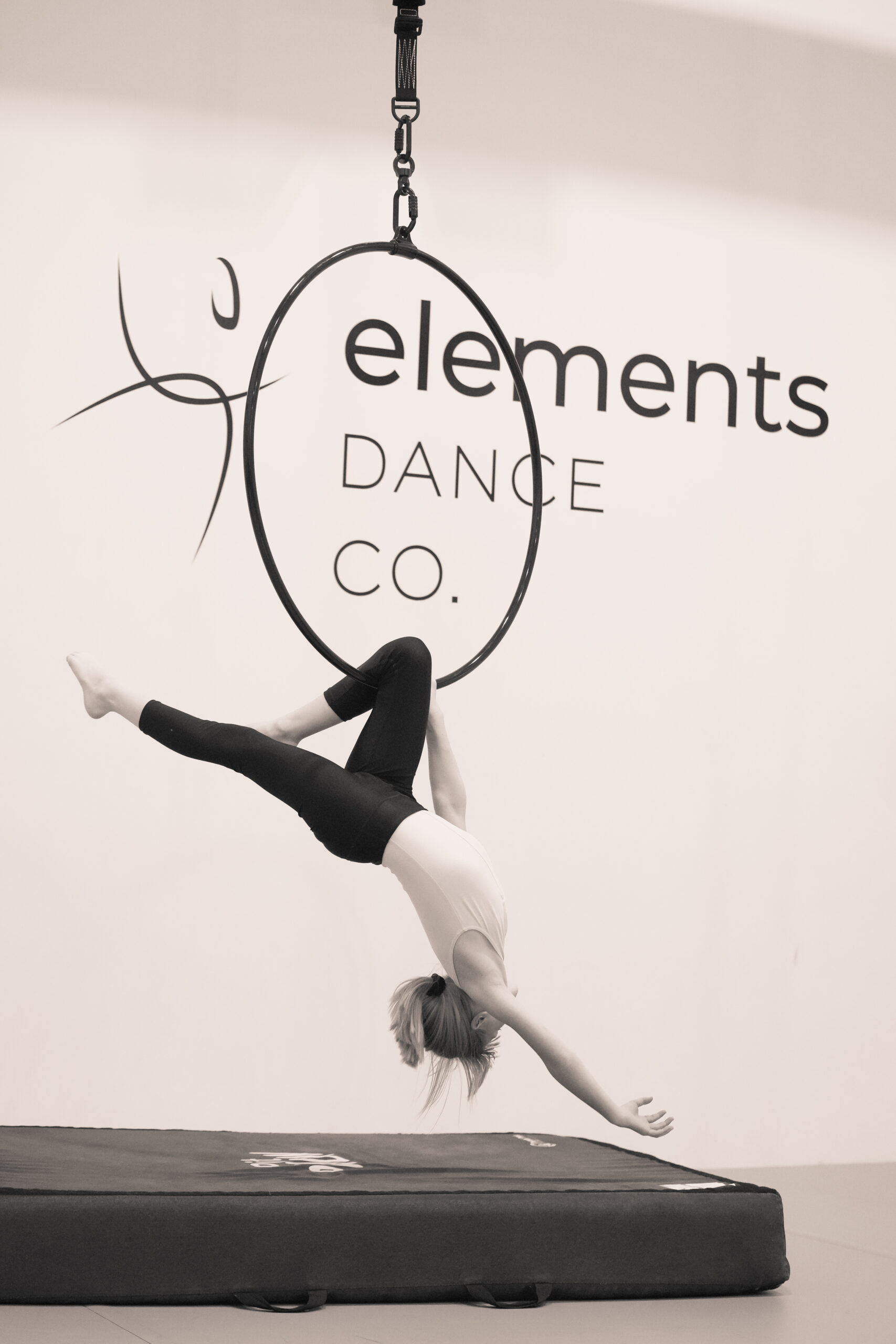
SAFETY PROTOCOLS FOR SAFE AERIAL SETUPS
You’ve probably seen many aerial yoga setups on Instagram and Facebook, here are some main factors to consider:
Where are you rigging your aerial apparatus to:
- A Freestanding Rig? Ensure that it is from a reputable aerial company (sadly, Amazon is not a reliable company I would bet my safety on when hanging upside down) At minimum your rig should list working load limits and meet industry standards! You might look into JuggleGear, Circus Concepts, or Vvolfy!
- A Point in your Building? Rigging in your home could void your home insurance (check first!) and if you plan to rig to existing structures you’ll need to get in touch with a structural engineer (to assess your beam) as well as an aerial rigger. Elements has been professionally rigged by Gaslamp FX!
- Hopefully Not: A Tree, Bridge, Old Swing Set, or Other Unknown Structure Makeshift rigging points that cannot be regularly inspected are unsafe to rig from. You are going to hang upside-down and literally put your life on the line with whatever structure you choose, and that structure is going to have to handle dynamic aerial loads (which can equal forces to 10x your body weight) so ensure you are making a safe choice, you are precious!
AERIAL GEAR; THE DO’S AND DONT’S
There are infinite places to purchase gear, always ensure your gear has been load tested and is from a reputable company. If you do not know anything about aerial hardware, it is best to educate yourself through an aerial rigger! The below list is not exhaustive however here are common pieces of aerial gear you might need in your home rigging setup:
- Your Apparatus- Whether it is an aerial silk/sling, hoop, trapeze or other specialty circus apparatus ensure that is from a reputable company. Most aerialists prefer low stretch silks (less pinchy + easier to climb) and solid steel for their apparatus (stronger/safer and more stable!) Aerial silks length can be calculated by doubling it by two and adding 6-8 feet of length for the tail on the floor!
- Crash Mats- It is not recommended to practice or perform aerials without some type of crash mat beneath you; the bigger and thicker the better. Even Cirque Du Soleil pulls out nets in some shows under their performers, safety first!
- Carabiners- the preference for carabiners is solid steel (higher working load and minimum breaking strength) and triple locking (open gates significantly reduce the strength of a carabiner, if you are using a screwgate carabiner you MUST remember to screw the gate closed downward so that gravity does not unscrew it!) A good rule of thumb is that any gear with more than 10% visible wear should be replaced, but check with individual manufactur instructions for in-depth care!
- O rings, Swivels, Rescue 8’s, Slings, and More! There are infinite amounts of gear to utilize in rigging and many many safety concerns to keep in mind. Daisy chains although seemingly user-friendly and easily to adjust the height of your aerial apparatus, typically do not have individually rated loops. Rescue 8’s (along with every piece of aerial equipment) should be visually inspected to make sure your silk has not slipped over the lip so it doesn’t get accidentally punctured!
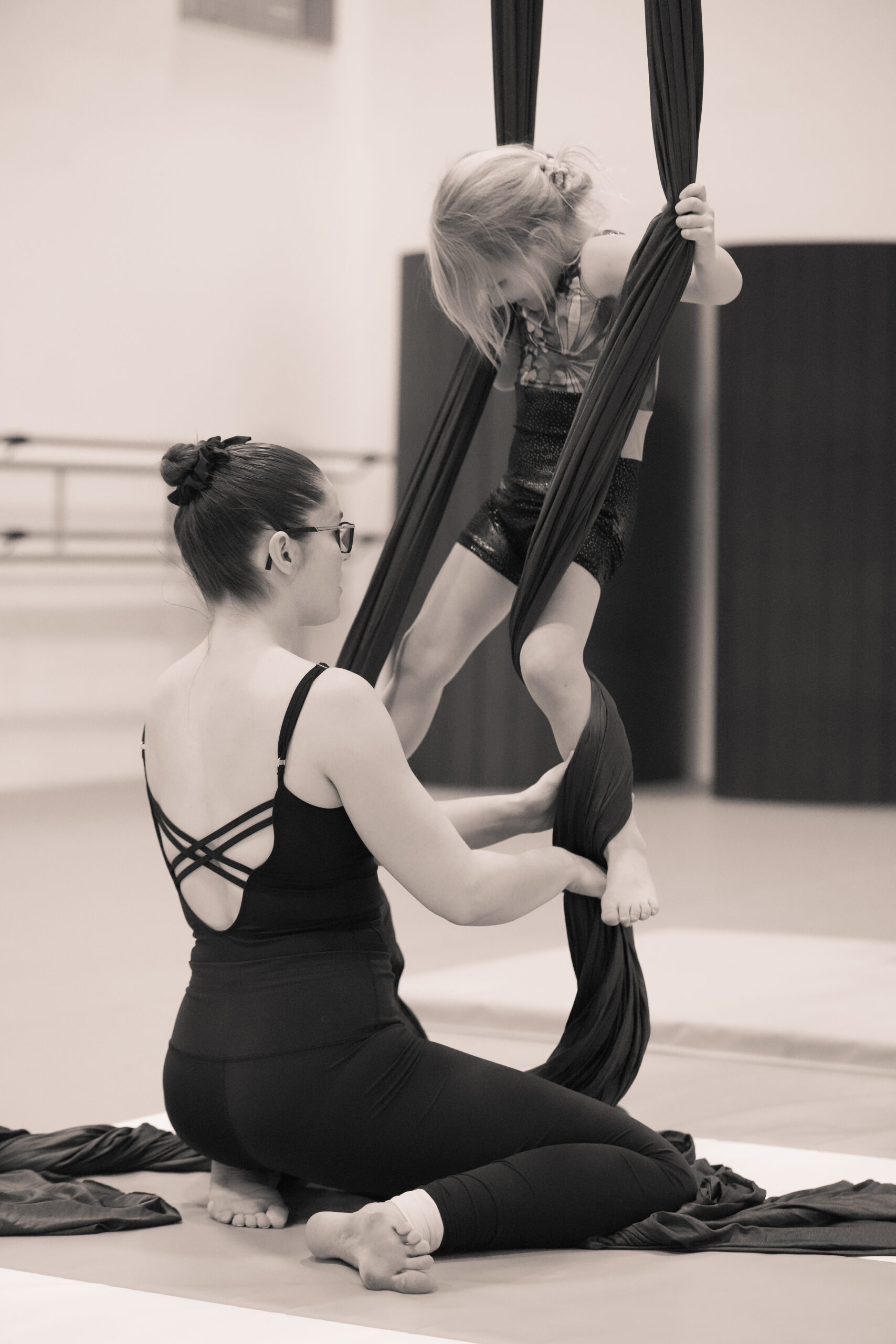
There are many things to keep in mind when practicing aerials at home, here are a final few:
- Always practice with another person nearby and never leave children alone with an apparatus. Aerial silks especially are notorious for getting tangled!
- Learn your skills from a professional instructor and never perform skills you have not learned or are unsure of. If you don’t know how it can go wrong, it’s likely not a safe choice to simply try and “see what happens”
- Ensure to wear clothing flush against your skin to reduce the risk of it getting caught in your apparatus. Jewelry also poses hazards of getting tangled/pulled out and in addition can rip or shear against your silk/sling reducing it’s lifespan over time!
Aerial Arts are such a fun way to keep fit, make friends, and keep your brain active by learning new things. We hope this blog post helps you continue to have the most fun and safe aerial practice possible. Happy December!
-Written by Morgan Pack